Chinese Tattoo 随遇而安: Meaning & Design Guide
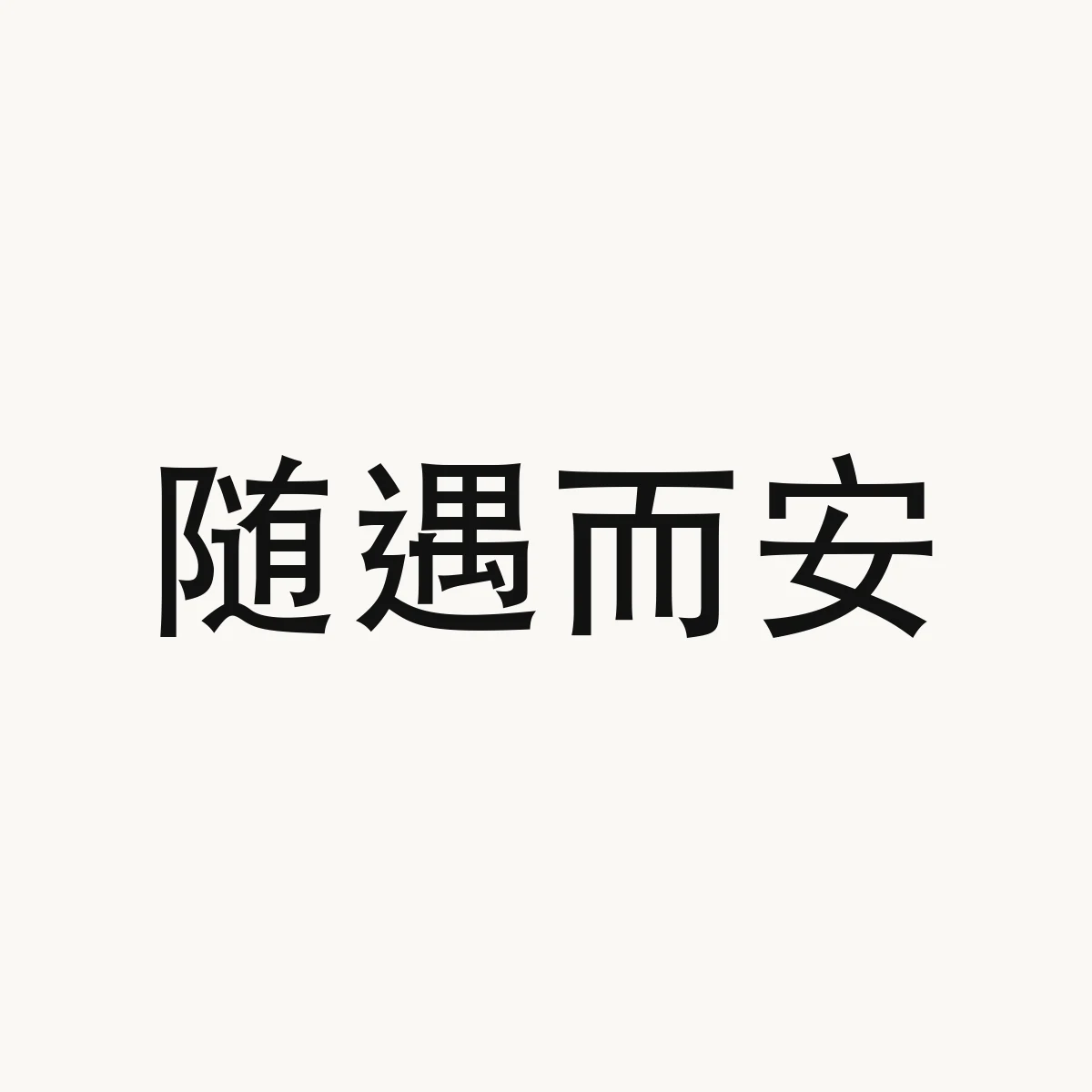
随遇而安 means “at home wherever one is (idiom); ready to adapt”, pronounced sui2 yu4 er2 an1. Below: each character broken down, and how the phrase works as a tattoo.
Character by character
| Character | Pinyin | Meaning | Strokes |
|---|---|---|---|
| 随 | suí | follow, listen to, submit to | 11 |
| 遇 | yù | meet, come across, encounter | 12 |
| 而 | ér | and; and then; and yet; but; Kangxi radical 126 | 6 |
| 安 | ān | peaceful, tranquil, quiet | 6 |
Per-character data: Unihan (Unicode).
Words using these characters
| Word | Pinyin | Meaning | HSK |
|---|---|---|---|
| 随便 | suí biàn | as one wishes | newest-4 |
| 随时 | suí shí | at any time; at all times | newest-5 |
| 随着 | suí zhe | along with | newest-4 |
| 遇到 | yù dào | to meet; to run into; to come across | newest-3 |
| 遭遇 | zāo yù | to meet with | newest-6 |
| 遇见 | yù jiàn | to meet | newest-3 |
Words: HSK vocabulary list · meanings: CC-CEDICT.
Placing 随遇而安
随遇而安 mixes heavy and light characters — the dense 遇 (12 strokes) sits beside the lighter 而 (6) — so equal measured sizes can look uneven on skin. Ask your artist to match the optical weight instead, and to keep the baseline level across all 4 characters. It totals 35 strokes, so it needs a placement with room — the inner forearm or upper back rather than a narrow spot. Four-character phrases are usually set 2×2 or in one line; pick one and keep it consistent. Bring the stencil together with the pinyin and the meaning, and ask the artist to follow the stencil rather than redrawing the character freehand — freehand redrawing is the most common way a correct character loses a stroke and becomes a different one.
Design notes for 随遇而安
随遇而安 is a fixed four-character expression meaning “at home wherever one is (idiom); ready to adapt”, read sui2 yu4 er2 an1. Because it is set, swapping any character changes the meaning — have the exact wording checked by a native reader before it goes on skin. Regular script (楷书) keeps every stroke countable, which matters when a Chinese reader checks it. Avoid mirroring or rotating the character, and avoid very fine or cursive styles at small sizes, where strokes merge into a shape that reads as a different character.
Frequently asked questions
What does 随遇而安 mean?
随遇而安 means “at home wherever one is (idiom); ready to adapt”.
How is 随遇而安 pronounced?
随遇而安 is pronounced sui2 yu4 er2 an1.
Is 随遇而安 a fixed expression?
Yes — it is a set phrase, which is safer than assembling characters yourself. Fixed expressions keep their established wording and meaning.
How should 随遇而安 be laid out?
A four-character expression is usually written as a 2×2 square block or a single horizontal line. Keep the characters the same size and do not mirror or rotate any of them.
Which style suits 随遇而安?
Bold regular script keeps every stroke clear. With multiple characters, avoid very fine or highly cursive styles — the smaller each character gets, the more the strokes merge.
Do I need to verify the phrase?
Yes. Confirm the wording, the meaning and the full context with a native reader, and check that the phrase is not a quotation about misfortune or parting.
How many strokes in total?
随遇而安 is written with 35 strokes across 4 characters — which is why it needs more space than a single character.
Want 随遇而安 as a ready-to-use stencil with a native-checked meaning card, sized for your tattoo artist?
✦ Get this designNot ready? Browse more characters · All 150+ characters
Character data: Unihan (Unicode) · words: HSK vocabulary & CC-CEDICT · How we verify this